
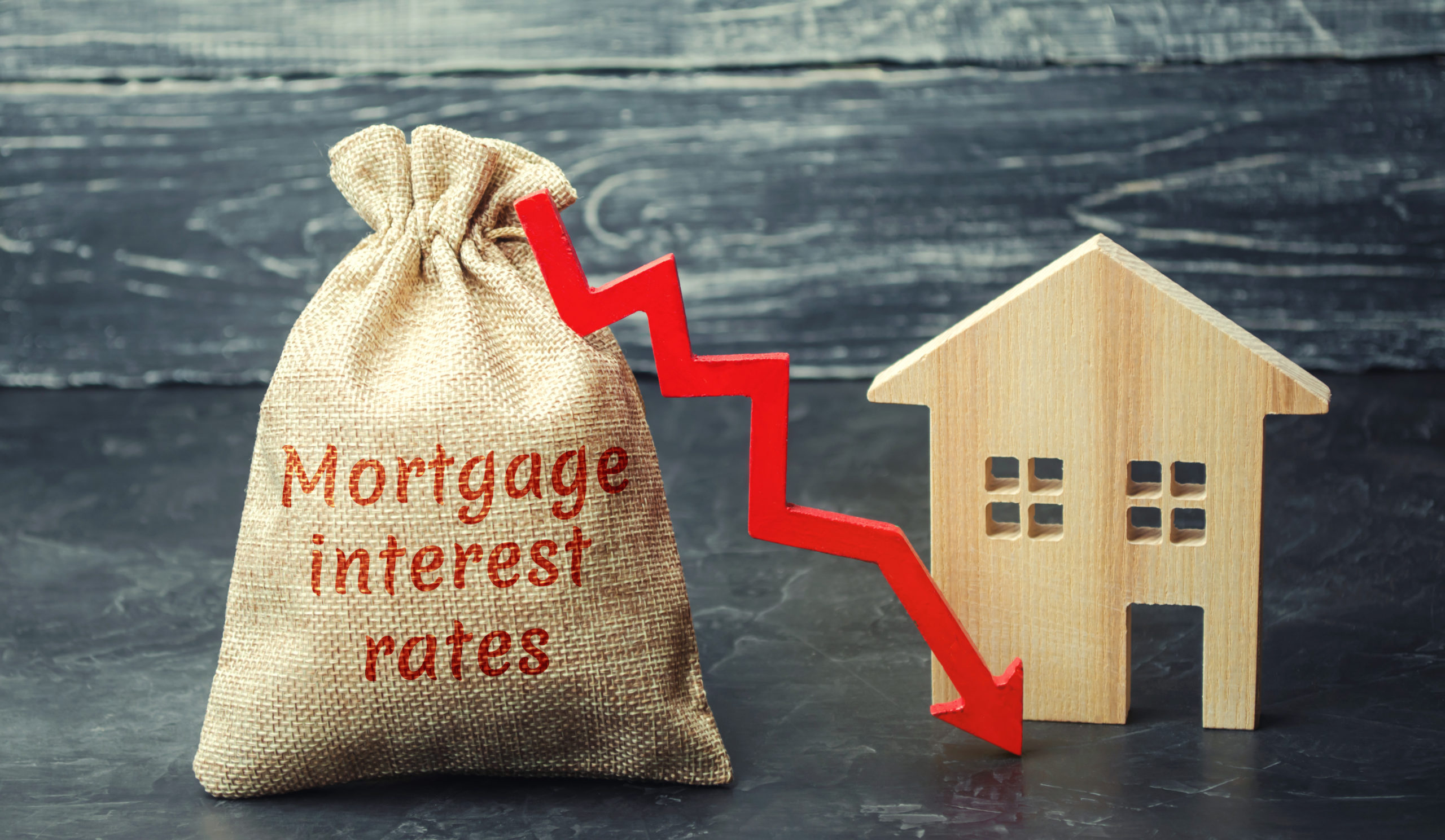
The UAE Just Raised Rates
What the 0.25% Rise Means for Your Dubai Mortgage
The Central Bank of the UAE lifted its base rate to 3.90% on 17 September 2026, following the US Federal Reserve’s first hike since 2023. Here is what actually changes for a Dubai buyer — and for most people, it is less than the headline suggests.
The Cutting Cycle Just Reversed
On 16 September the US Federal Reserve raised its Interest Rate on Reserve Balances by 25 basis points — its first increase since 2023. Because the dirham is pegged to the dollar, the Central Bank of the UAE moves with it, and it did so the following day: the Base Rate applied to its Overnight Deposit Facility went from 3.65% to 3.90%, effective Thursday 17 September 2026.
That base rate is not the rate on your mortgage. It sets the floor for the interbank market, and the number that actually reaches borrowers is EIBOR — the rate UAE banks lend to each other at, which most variable mortgages are priced against. Three-month EIBOR moved to 4.21% on 17 September, up from 4.13% the day before.
The direction is the story here, not the size. Buyers have spent two years planning around rates that only fell. That assumption no longer holds.
Sayılar
Where UAE rates stand today
What 0.25% Adds to a Monthly Payment
A quarter point sounds like nothing until you put it against a 25-year term. These are illustrative figures for a repayment mortgage whose rate moves from 4.50% to 4.75% — your own rate will differ, but the size of the step will not.
| Loan amount | At 4.50% | At 4.75% | Extra per month | Extra per year |
|---|---|---|---|---|
| 1,000,000 AED | AED 5,558 | AED 5,701 | +AED 143 | AED 1,714 |
| 1,500,000 AED | AED 8,337 | AED 8,552 | +AED 214 | AED 2,571 |
| 2,000,000 AED | AED 11,117 | AED 11,402 | +AED 286 | AED 3,428 |
| 3.000.000 AED | AED 16,675 | AED 17,104 | +AED 429 | AED 5,143 |
| 5.000.000 AED | AED 27,792 | AED 28,506 | +AED 714 | AED 8,571 |
TruHauz calculation. Standard repayment mortgage, 25-year term, rate moving from 4.50% to 4.75%. Illustrative only — it shows the size of a 0.25% step, not a quote. Your rate depends on your lender, your margin over EIBOR and your profile.
Fixed or Variable Decides Everything
Most Dubai mortgages are fixed for an introductory period and then revert to a variable rate tracking EIBOR plus a bank margin. Which side of that line you are on determines whether this week matters to you at all.
Nothing changes yet
Nothing changes for the rest of your fixed period. Your payment is locked. The date worth knowing is when that period ends — put it in your calendar now, because that is the day this rise reaches you.
You feel it at the next reset
Your rate is EIBOR plus your bank’s margin, and it reprices at set intervals — commonly every three or six months. You will see the increase at your next reset, not immediately.
Lock the rate while you search
Some UAE lenders will hold an approved rate for up to 90 days. If you are house-hunting, getting pre-approved fixes your borrowing cost while you search rather than leaving it floating.
Four Things Worth Doing This Week
1. Find out which rate you are on. A surprising number of Dubai owners cannot say whether they are fixed or variable, or when the fixed period ends. Your offer letter says both. Read it.
2. If you are buying, get pre-approved. A rate hold of up to 90 days turns an unknown into a fixed number while you search. It costs nothing to have and it removes the risk that your budget moves under you mid-search.
3. Re-run your affordability at a higher rate, not today’s. If a purchase only works at 4.50%, it is not a purchase that works. Stress it at a point higher and see whether you still like it.
4. Do not panic-fix on one move. One 25 basis point rise is not a trend, and fixing has its own cost — you usually pay a premium for the certainty and you give up the upside if rates fall again. Decide on your own time horizon, not on one week’s headline.
For context on what a Dubai mortgage involves end to end — deposit rules, fees, and what lenders ask of non-residents — our Dubai mortgage guide covers the process in full.
Not sure what this does to your budget?
Send us your loan size and term and TruHauz will run the numbers at today’s rates — and introduce you to a mortgage adviser who can hold a rate while you look.
Questions Buyers Are Asking This Week
Yes. The Central Bank of the UAE raised its Base Rate by 25 basis points, from 3.65% to 3.90%, effective Thursday 17 September 2026. The Base Rate applies to the CBUAE’s Overnight Deposit Facility and signals the general stance of UAE monetary policy. The move followed the US Federal Reserve’s decision on 16 September to raise its Interest Rate on Reserve Balances by the same amount — the Fed’s first increase since 2023. Because the UAE dirham is pegged to the US dollar, the CBUAE tracks Federal Reserve decisions closely, which is why UAE rate changes almost always follow within a day.
On a 25-year repayment mortgage, a rate moving from 4.50% to 4.75% adds roughly AED 143 a month on a AED 1,000,000 loan, AED 286 on AED 2,000,000, and AED 714 on AED 5,000,000. Over a year that is about AED 1,714, AED 3,428 and AED 8,571 respectively. Those are illustrative figures, not a quote — your actual payment depends on your lender, your margin over EIBOR, your remaining term and your profile. The point is the scale: a quarter point is a real number on a large loan over a long term, but it is not the kind of move that breaks a well-structured purchase.
Not during your fixed period. If you are on a fixed rate, your repayments stay the same until that period ends, regardless of what the Central Bank does in the meantime. What matters is the date your fixed term expires, because that is when your loan reverts to a variable rate and picks up whatever the rate environment looks like then. Most Dubai mortgages are fixed for an introductory period of one to five years and then revert to EIBOR plus a bank margin. If you do not know your expiry date, it is on your offer letter, and it is worth diarising.
EIBOR is the Emirates Interbank Offered Rate — the rate at which UAE banks lend to one another. It is the benchmark most UAE variable mortgages are actually priced against, usually quoted as EIBOR plus a bank margin. The CBUAE Base Rate sets the floor for that interbank market, so a change in the Base Rate feeds through to EIBOR rather than applying to your loan directly. Three-month EIBOR stood at 4.21% on 17 September 2026, up from 4.13% the previous day. If you hold a variable mortgage, EIBOR is the number to watch, not the headline base rate.
It depends on your time horizon, not on one week’s news. A single 25 basis point rise is not a trend, and fixing is not free — you generally pay a premium for the certainty, and you give up the benefit if rates fall again during the fixed period. Fixing makes most sense if a rise would genuinely strain your budget or if you need payment certainty for a defined period. If you are still searching rather than committed, the more useful step is a mortgage pre-approval: some UAE lenders will hold an approved rate for up to 90 days, which protects your borrowing cost while you look without locking you into a long fixed term.
Base Rate change, effective date and facility as announced by the Central Bank of the UAE on 17 September 2026 and reported by Gulf News and Khaleej Times. US Federal Reserve decision of 16 September 2026. Three-month EIBOR levels for 16–17 September 2026 per Trading Economics. Payment figures are TruHauz calculations on a standard 25-year repayment mortgage. This article is general information about the UAE rate environment and is not financial, mortgage or investment advice — take advice on your own circumstances before acting.
TruHauz ile konuş
Whether you are buying, refinancing or just want to know what your next reset looks like, send us the numbers and we will come back with a straight answer.



Tartışmaya Katılın