
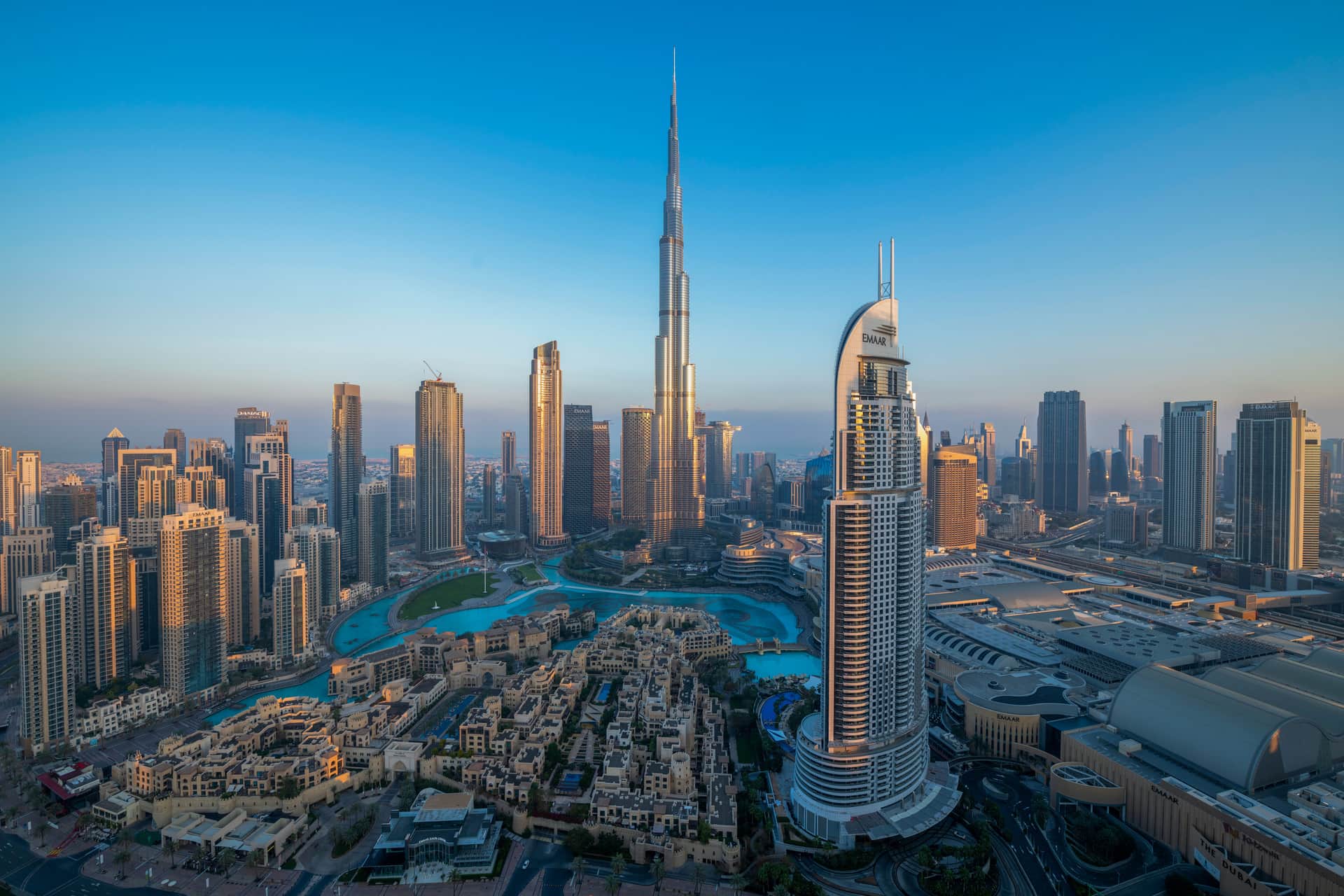
Makani Number in Dubai
The Ten Digits That Are Your Actual Address
Dubai does not really run on street addresses. It runs on a ten-digit code issued by Dubai Municipality that pins a building entrance to within a metre — and from the fourth quarter of 2026 that code is being put onto new house plates across the emirate, with a QR code beside it. Here is what a Makani number is, where to find yours, and the three other numbers people confuse it with.
What a Makani Number Actually Is
A Makani number is a ten-digit code that identifies the entrance to a building. The name means “my location” in Arabic. Gulf News, in a reference guide last updated on 25 November 2020, describes it as the official geographic addressing system in Dubai, Ajman, Fujairah, Ras Al Khaimah and Umm Al Quwain, reports that it was launched by Dubai Municipality in 2015, and explains that each number is unique and is intended to locate an entrance to within less than one metre on an electronic map. The same guide notes the code is derived from a universal geographic coordinate standard.
That last point is the one worth holding on to, because it explains why the number behaves the way it does. A Makani number is not an index into a list of streets and building names. It is a compressed coordinate. It does not care whether the road it sits on has a name, whether the building has been renamed by its new owner, or whether the community was finished last year. It describes a point on the ground. In a city that has added districts faster than it has added street names, that is a genuinely useful property.
It also explains why Dubai’s emergency and transport services lean on it. Gulf News lists giving the number to police or ambulance services as a core use, and notes a Dubai Police priority-response registration — available to heart patients, people with other critical illnesses and people of determination — for which a Makani number is required. The same guide describes entering the number into the S’hail app or the Dubai Taxi website to identify a pickup location, and records that government organisations, police and ambulance services use the system.
Three Ways to Find Yours
All three routes are free and none of them requires an account or a login. The order below is simply the order of least effort.
Entrance, Then Unit: the Makani Board
The ten-digit code stops at the entrance. Getting from a tower’s front door to a specific apartment is a separate problem, and Dubai Municipality addressed it with a second layer. In an announcement published in October 2020, the municipality described the Makani board as an extension of the existing Makani system of entrances, covering residential units, shops, offices and other units inside buildings. Each unit is given a short code of six letters and numbers — the municipality’s own example is DMHQ01 — displayed on the unit’s Makani board. The public Makani system was updated at the same time to show units and their openings and directions inside buildings.
The infrastructure behind it is more ambitious than a numbering scheme suggests. The municipality said building data is prepared in three dimensions and linked to GeoDubai and the emirate’s Digital Twin. The stated purposes run from emergency services and statistical data to deliveries, and explicitly anticipate drones and self-driving vehicles, which need unit-level accuracy and three-dimensional data to be useful at all. The first board was installed at Dubai Festival City, alongside a memorandum of understanding on geospatial infrastructure for Dubai.
Your Makani Number Is About to Be on the Wall Outside
Until now, finding a Makani number has usually meant opening an app. That is changing. Gulf News reported on 7 October 2026 that Dubai has launched a new visual identity for its addressing system, announced by the Supreme Committee for Urban Planning working with the Roads and Transport Authority and Dubai Municipality.
For owners and tenants the consequence is mundane and welcome: the number you currently have to look up will increasingly be legible from the kerb, and scannable. For anyone marketing property, it is a reason to start putting the Makani number into viewing instructions now rather than later.
The Other Numbers Attached to a Dubai Property
A Dubai home carries several identifiers, issued by different bodies for different purposes. Asking for “the number” is how the wrong one ends up on a form.
| Identifier | Issued by | What it identifies | Typically used for |
|---|---|---|---|
| Makani number | Dubai Municipality | A building entrance, to within under a metre | Navigation Emergency response, taxis, deliveries |
| Makani board code | Dubai Municipality | An individual unit inside a building — six characters | Unit level Deliveries, future drone and autonomous access |
| Title deed | Dubai Land Department | Legal ownership of the property | Ownership Sale, mortgage, Ejari, visa applications |
| DEWA account and premise details | Dubai Electricity and Water Authority | The utility connection serving the unit | Utilities Billing, move-in and move-out |
The distinction that catches people most often is between a Makani number and the documents Ejari actually wants. Registering a tenancy on Ejari is a Dubai Land Department process, and the Dubai Land Department’s published Tenancy Guide lists, for a tenant-led registration, the tenant’s passport copy, the contract, the last month’s electricity and water invoice with the meter in the tenant’s name, and a copy of the land map or the title deed of the property. A Makani number is not a substitute for any of those. Our guides to Ejari registration and to Ejari renewal and download set out the full document lists.
Equally, a Makani number tells you nothing about tenure. Whether a property can be owned outright by a foreign national depends on where it sits relative to the emirate’s designated freehold areas — covered in our guide to freehold areas in Dubai — and what you pay to run it depends on the building’s service charge, explained in our guides to service charges and the Mollak system. The addressing layer and the ownership layer are genuinely separate.
When You Will Actually Need It
In an emergency. This is the use the system was built for and the one worth acting on today. Gulf News lists giving the number to police or ambulance services as a primary use, and records that the Dubai Police priority-response registration for heart patients, people with other critical illnesses and people of determination requires a Makani number. If anyone in your household falls into those categories, finding the number is a ten-minute job with a real payoff.
Getting a car to the right door. Entering the number into the S’hail app or the Dubai Taxi website identifies your location. In communities where several towers share an approach road, this is the difference between a driver finding you and a driver circling.
Viewings and contractors. No sourced claim is needed here, only common sense: a code that resolves to a specific entrance beats “the second tower after the roundabout”. Agents and landlords who put the Makani number in viewing confirmations see fewer missed appointments.
Deliveries, now and later. Dubai Municipality named delivery services among the purposes of the unit-level Makani board, and tied the system to anticipated drone and self-driving vehicle use. The direction of travel is clear enough to be worth getting ahead of if you let property to guests or tenants who order a great deal.
Looking for the address to put your own name on?
A Makani number gets people to the door. A title deed decides whose door it is.
Sources and scope. The definition, digit length, issuing authority, 2015 launch, stated sub-metre accuracy, the five emirates using the system, the methods of finding a number and the emergency, Dubai Police priority-registration and taxi uses are taken from a Gulf News reference guide last updated 25 November 2020. The unit-level Makani board, its six-character code format and example, the three-dimensional building data linked to GeoDubai and the Digital Twin, the stated purposes and the first installation at Dubai Festival City are taken from a Dubai Municipality announcement published October 2020. The 2026 signage programme — the unified designs, Makani numbers and QR codes on new house plates, the five-colour scheme, the phase-one areas and sign count, the 186 areas across 19 sectors, the fourth-quarter 2026 start and 2030 horizon, and the announcing authorities — is taken from Gulf News, 7 October 2026. The Ejari document list is from the Dubai Land Department’s published Tenancy Guide. All retrieved 21 October 2026. Procedures, app features and rollout schedules can change; confirm current details with Dubai Municipality.
Frequently Asked Questions
What residents, tenants and owners ask most often about Dubai’s Makani addressing system.
An Address Worth Owning
TruHauz advises on the ownership side — which building, which community, what it costs to hold and what it should return. Tell us what you are looking for.
Join The Discussion