
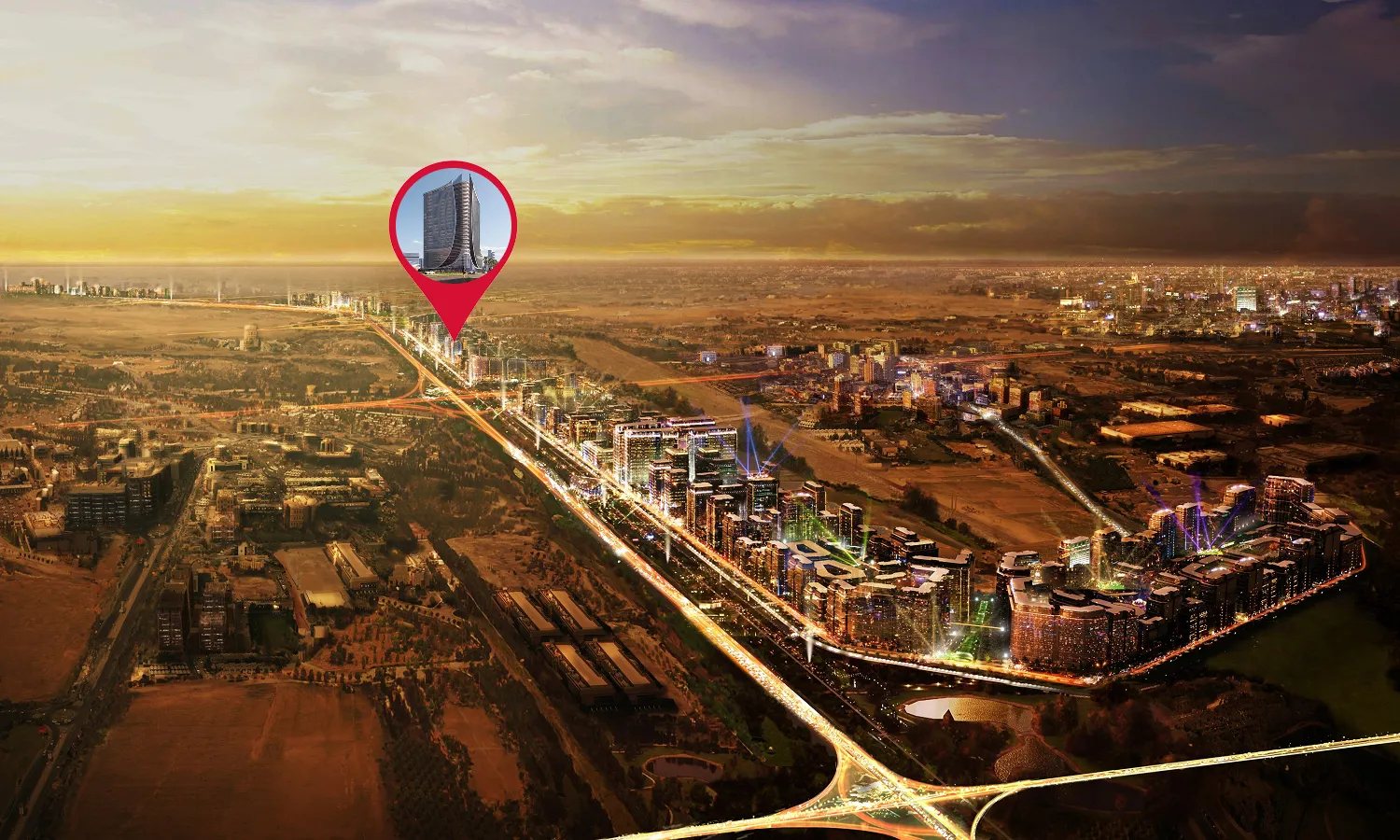
Warehouse for Rent in Dubai
What It Costs by Submarket, and What You Must Have Before You Sign
Dubai’s industrial market has spent two years as a landlord’s market, and the published data explains why: rents are climbing, renewals are at record levels, and space is scarce enough that most occupiers are staying put. Here is what warehouse space costs across the main submarkets, how free-zone and mainland premises differ, and the approval sequence that decides whether you can legally put goods in a unit at all.
A Landlord’s Market, and the Numbers Say Why
The most useful thing to understand before you start viewing warehouses in Dubai is that you are negotiating from a weak position — and that this is a measurable change, not a broker’s talking point.
Cavendish Maxwell, reported by TradeArabia on 21 September 2026, found that Dubai warehouse leasing generated a total rental value of AED 1.8 billion in the first half of 2026, up 10% year on year across around 10,000 leases, with the average cost of renting a warehouse up almost 12.5%. Every location the firm monitors showed positive growth, strongest in Jebel Ali at 15.5%, Dubai Industrial City at 15% and Ras Al Khor at just under 14%.
The composition matters more than the headline. Overall leasing contracts were down 4.5% against the first half of 2025, and new contracts fell by more than 50%. What held the market up was renewals: around 8,200 between January and June, up 22% and a half-year record. The volume is not businesses moving into new space — it is businesses staying put and accepting the increase.
That is the signature of tight supply: when good units are scarce, the rational move is to renew rather than risk a search, and landlords price accordingly. Knight Frank’s UAE Industrial and Logistics Report, reported by Construction Business News Middle East on 9 February 2026, described high occupancy and sustained rental growth across all key submarkets through 2025 — the same picture a year earlier. Start your search earlier than feels necessary, and expect to compete. If you are renewing, your leverage is not the threat of leaving but the rent-increase framework, covered below.
Dubai warehouse leasing, H1 2026
Cavendish Maxwell, via TradeArabia, 21 Sep 2026
What Warehouse Space Costs Across Dubai
Annual rents per square foot, as published in Knight Frank’s UAE Industrial and Logistics Report and reported by Construction Business News Middle East on 9 February 2026. These are benchmarks for negotiation, not quotations: they exclude VAT and service charges, and asking rents move with availability.
| Submarket | Rent (AED / sq ft / yr) | Annual growth | Character |
|---|---|---|---|
| Al Quoz | ~100 | Most expensive | Central, inside the city, light industrial and showroom-led |
| Dubai Investments Park | 60–65 | Broadly stable | Established mixed industrial and logistics, mainland |
| Dubai Industrial City | 58 | +32% — highest | Manufacturing-oriented, purpose-built stock |
| Dubai South | 45–55 | +25% | Airport and logistics corridor, newer supply |
| National Industries Park | 42–52 | Broadly stable | Heavy and bulk industrial, Jebel Ali hinterland |
| JAFZA North & South | 40–45 | ~+22% | Free zone, port-adjacent, re-export focused |
The spread is wide, and it is explained by location and permitted use rather than by build quality. Al Quoz is expensive because it is inside the city — the only industrial district from which you can serve central Dubai in minutes, which is why it attracts showrooms, workshops, studios and last-mile operations paying for proximity rather than storage. JAFZA is cheap in rent terms because its proposition is customs treatment and port access rather than access to Dubai’s own consumers, and, as set out below, a free-zone licence constrains who you can sell to. Dubai South and Dubai Industrial City sit in between with newer purpose-built stock, and both have grown fast: Dubai Industrial City recorded the highest annual rental growth of any submarket in the Knight Frank data, at 32%.
The cheaper southern and western submarkets are closing the gap — what you would expect when central stock is full and occupiers are pushed outward. Two infrastructure threads sit underneath them: the expansion of Al Maktoum International, and the Etihad Rail network and its Dubai stations, a freight railway before it is a passenger one. Our guides to Dubai South and Jebel Ali property cover both districts more broadly.
Free Zone or Mainland?
This is not a question about the building. It is a question about who you intend to sell to, and getting it wrong is expensive to unwind because your licence, your customs position and your premises are tied together.
Sell directly into the UAE
A licence from Dubai’s Department of Economy and Tourism lets you invoice UAE customers directly, with no distributor in between. Customs duty is paid when goods are imported. Ejari registration of the lease is part of the licensing chain. Rents in the mainland industrial districts — Al Quoz, DIP, Dubai Industrial City, Ras Al Khor — are generally higher than in the free zones.
Import, hold, re-export
In a free zone such as JAFZA, imported goods sit under customs duty suspension while they remain in the zone or are shipped onward abroad. That is a genuine working-capital advantage for a re-export or regional distribution business. The constraint is the domestic market: a free-zone entity cannot simply invoice mainland UAE customers on its own account.
Duty is deferred, not waived
When free-zone goods do enter the mainland, they are cleared and the applicable customs duty falls due at that point — routed either through an authorised mainland distributor or through an onshore clearance. If most of your revenue is domestic, the cheaper free-zone rent can be a false economy once the distributor margin and duty are added back.
Licence categories, permitted activities and customs treatment change, and they differ by zone and by goods type. Confirm your own position with the Department of Economy and Tourism, Dubai Customs and the relevant free-zone authority before you commit to premises.
What Has to Be in Place Before You Store Anything
The most common and most costly mistake in Dubai industrial leasing is signing a lease for a unit that cannot lawfully host the activity you have in mind. Approvals attach to the specific building and the specific goods, not to the district.
Taken in the wrong order, these steps trap you. A lease signed before you have confirmed the unit is approved for your activity is a commitment to pay rent on premises you may not be able to use, and a landlord is under no obligation to release you because your licence application failed. Establish the permission first, then sign.
Ejari deserves emphasis because its role in commercial leasing is routinely underestimated. Registration is mandatory for commercial tenancies on the Dubai mainland, and it does more than record the contract: it makes the tenancy enforceable, it is the gateway to the Rental Dispute Settlement Centre, and the mainland licensing and utility steps depend on it. A landlord who is evasive about registering is telling you something about the premises or their own title. Our guides to the Dubai tenancy contract and the security deposit cover the document and the deposit mechanics.
Why the Asking Rent Is Not the Cost
Industrial asking rents in Dubai are quoted as an annual figure per square foot, and that figure is the beginning of the budget rather than the end of it. Three things sit on top of it, and the first is the one businesses most often miss.
VAT. A warehouse is commercial property, and the Federal Tax Authority treats supplies of commercial property as taxable at the standard VAT rate of 5%, normally charged to the tenant alongside the rent. If your business is VAT-registered and the premises are used for taxable business purposes, eligible input VAT may typically be recovered under the normal rules — making the 5% a cashflow cost rather than a permanent one, but only if you are registered and the conditions are met. Our guide to commercial property in Dubai sets out the VAT position with its source.
Service charges, utilities and fit-out. Industrial estates levy service charges for common-area maintenance, security and infrastructure — a recurring cost that quietly undoes the comparison between two units with the same headline rent, so ask for the actual historic charge rather than an estimate. Power is the other variable: a unit intended for chilled storage has an operating profile with little to do with its rent. Racking, mezzanines, offices and loading-bay modifications are usually the tenant’s cost, and the lease will often require reinstatement at the end of the term — a liability you accept at signing and pay for years later. See our guide to service charges in Dubai.
At renewal, one further point: Dubai’s rent-increase framework is not residential-only. Mainland commercial leases sit under Law No. 26 of 2007 as amended by Law No. 33 of 2008, and increases are governed by Decree No. 43 of 2013, which caps them according to how far the current rent sits below the market rate for comparable property. The decree does not distinguish residential from commercial. Our guide to the rental index and legal rent-increase bands explains the brackets — and in a market where average rents rose almost 12.5% in a half-year, that framework is the main thing between a renewing tenant and an open-ended increase.
Illustration only
5,000 sq ft in Dubai Industrial City
This is a worked illustration, not a quotation. It multiplies an assumed 5,000 sq ft by the AED 58 per sq ft Dubai Industrial City figure published in Knight Frank’s UAE Industrial and Logistics Report (reported 9 February 2026) and adds VAT at the standard 5% rate. Service charges, utilities and fit-out are deliberately left unquantified because they are unit-specific and we have no sourced figure for them.
Most Dubai Warehouse Deals Are Small
Industrial leasing is imagined as a business of vast distribution sheds. Dubai’s transaction data says otherwise, which matters if you are a smaller business worried you will not be taken seriously. Cavendish Maxwell’s first-half 2026 figures, reported by TradeArabia, show nearly 70% of Dubai warehouse leases were for premises under 5,000 sq ft, with more than half in the 2,000 to 5,000 sq ft band. Units above 10,000 sq ft accounted for almost 20%. The 5,000 to 10,000 sq ft band was least popular at around 12% — a real gap in Dubai’s stock, and worth knowing if your requirement falls there.
Requirements are a different measure from completed leases, and the contrast is instructive. On Knight Frank’s figures, warehouses of 10,000 to 50,000 sq ft made up 58.1% of requirements in the second half of 2025, units of 50,000 to 100,000 sq ft 22%, and mega-warehouses above 100,000 sq ft just 7.8% of new demand despite being much discussed. Larger occupiers are searching; smaller occupiers are signing. Knight Frank attributed 21% of 2025 demand to logistics occupiers and another 21% to manufacturing and industrial, with retailers and traders at 14% and technology occupiers at 12%.
Looking for industrial or logistics space in Dubai?
Tell us the activity, the goods and the sales model, and we will tell you which submarkets and licences actually fit.
Buying a Warehouse Rather Than Renting One
The same scarcity pushing rents up has made Dubai industrial property an asset class institutional money now takes seriously, raising a fair question for an established occupier: own the box rather than rent it? On pricing, Knight Frank’s report noted demand placing further downward pressure on prime industrial yields towards sub-8% territory — the words of Faisal Durrani, quoted in the Construction Business News Middle East coverage of 9 February 2026. A compressing yield means capital values rising faster than rents: good for an existing owner, a warning for a buyer arriving late. Supply is the variable to watch: Knight Frank put the Dubai pipeline at 6.6 million sq ft due in 2026, around 2.2 million sq ft in 2027 and 5.9 million sq ft in 2028 — an uneven profile whose thin middle year tends to sustain rental growth longer than the total suggests. Our guide to rental yield and ROI turns a headline yield into the figure you actually receive.
The buying mechanics match any Dubai commercial asset: title registers through the Dubai Land Department, the transfer registration fee is 4% of the sale value, and VAT applies in a way it does not for residential property. Eligibility depends on where the building sits, because several main industrial districts are inside free zones running their own registration arrangements rather than the mainland DLD process — establish which authority registers title for the specific unit before you negotiate. See our guides to commercial property in Dubai, DLD fees, Dubai’s freehold areas and UAE Corporate Tax and investment property. For most occupiers, though, the decision turns on how certain you are about your own footprint: a warehouse is a highly specific asset, and renting keeps that specificity someone else’s problem.
Frequently Asked Questions
The questions businesses ask most often before leasing industrial space in Dubai.
Industrial Space Rewards Getting the Sequence Right
TruHauz works through the submarket, the licence, the approvals and the true occupancy cost before you commit to a unit. Tell us what you need to store and where you sell.


Join The Discussion