
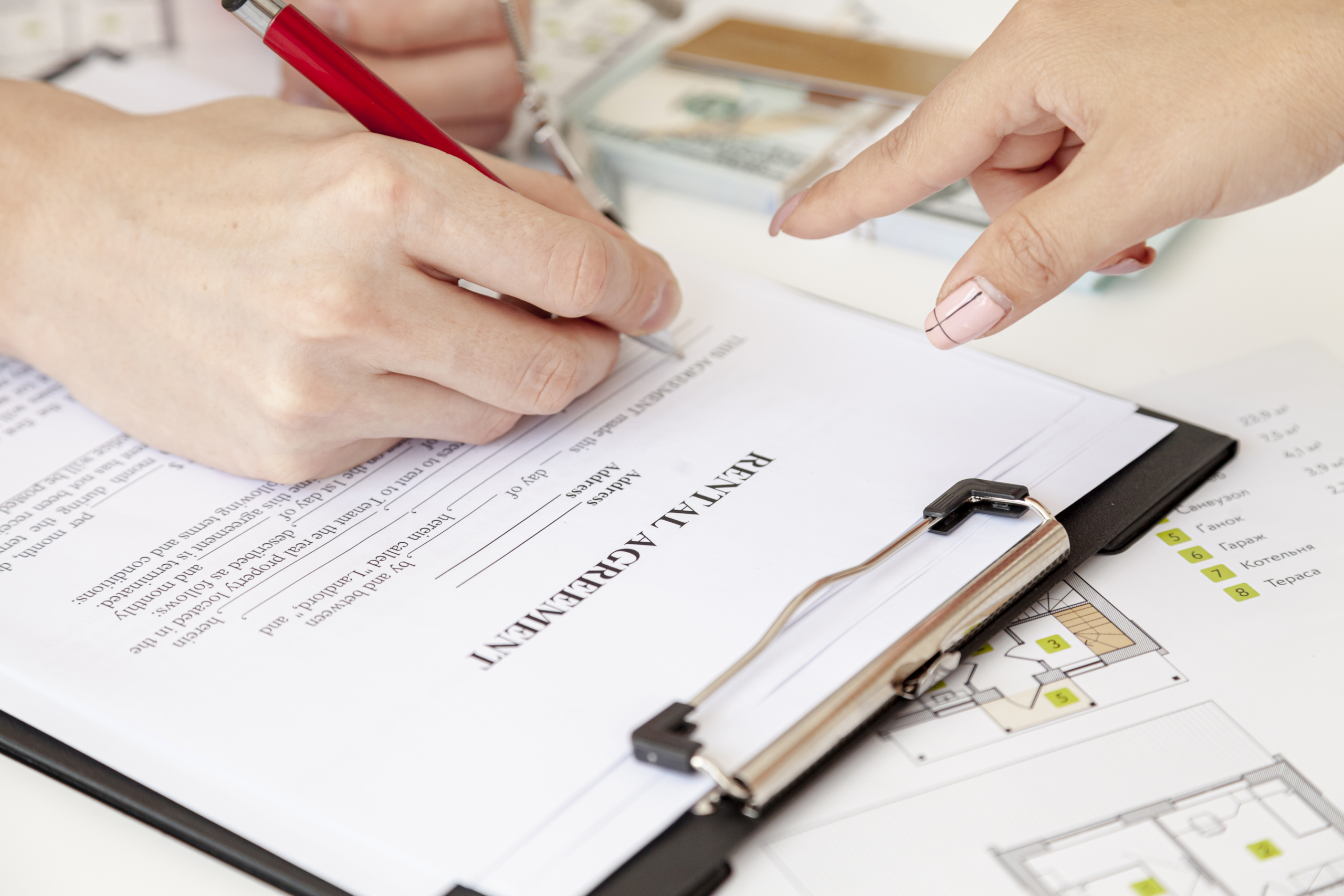
Buying Property in Sharjah
Who Can Own Freehold, and What the Data Shows
Sharjah opened ownership to all nationalities in 2022, but the permission attaches to approved projects rather than to the emirate, and there is no published freehold map to check. This guide sets out what the law actually grants, what the registry recorded in the first half of 2026, and the one question that decides whether a Sharjah purchase is safe.
What Sharjah Actually Lets a Foreigner Own
Sharjah is the third-largest emirate by population and the only one that borders both the Arabian Gulf and the Gulf of Oman. For most of its modern history it was effectively closed to non-Gulf property buyers. That changed in two steps, and understanding the difference between them is the whole of the due diligence here.
The first step was narrow. Executive Council Resolution No. 26 of 2014, issued on 16 November 2014 by the Crown Prince of Sharjah, allowed foreign nationals and foreign-owned companies to hold a usufruct over vacant plots for a maximum of 100 years, registrable with the Sharjah Real Estate Registration Department. A usufruct is a right to use and to let, not to dispose of, reconstruct or demolish. As Al Tamimi & Company recorded in October 2015, freehold ownership at that point remained restricted to UAE and GCC nationals.
The second step was the real opening. On 1 November 2022 the Sharjah Executive Council announced a decision “allowing all nationalities to own real estate of all kinds without limitation of time in real estate development areas and projects,” made under Law No. 2 of 2022 concerning real estate registration, issued the previous day. The same session issued a decision regulating the mortgage of real estate in the emirate, including the conditions and procedures for registering a mortgage — the necessary plumbing for a functioning ownership market.
“Without limitation of time” is the operative phrase: it describes ownership in perpetuity rather than a term. But note what the sentence does not say. The permission is scoped to “real estate development areas and projects,” not to the emirate as a whole. This is the same architecture Dubai uses, and readers of our guide to freehold areas in Dubai will recognise it — with one critical difference. Dubai publishes its designated areas. Sharjah’s approval attaches project by project, and there is no consolidated public list to check. Ajman, by contrast, has published a list of designated areas since 2008, which makes verification there materially easier — our guide to buying property in Ajman sets out that comparison.
No UAE residence visa is required before buying, so overseas buyers can purchase directly. The tax position is the federal one: no annual property tax and no tax on rental income for individuals, the same footing described in our guide to Dubai property tax. Because the two instruments still coexist, our explainer on freehold versus leasehold is worth reading before you sign anything in Sharjah.
Sharjah at a Glance
Ownership, cost and market position
What Sharjah Property Actually Costs
Average apartment sale prices per square foot, by area, from Bayut’s Sharjah market report for 2025. Sharjah has no widely published emirate-wide price-per-square-foot index from a named research firm, so per-area figures are the honest level of detail.
| Area | Avg apartment price / sqft | Change on 2024 | What it is |
|---|---|---|---|
| Aljada | AED 1,041 | +3% | Arada’s flagship master development |
| Muwaileh | AED 994 | +4% | Established mid-market; strong rental demand |
| Al Khan | AED 971 | +9% | Waterfront; most popular for apartment sales |
| Al Majaz | AED 728 | +6% | Central, corniche-adjacent older stock |
| Al Nahda | AED 524 | +21% | Cheapest per sqft; Dubai-border location |
Source: Bayut, Sharjah market report for 2025, page updated 2 September 2026. Figures compare full-year 2025 with 2024. Percentages are Bayut’s own.
The first thing to take from that table is the range. Al Nahda at AED 524 per square foot and Aljada at AED 1,041 differ by almost exactly a factor of two, inside one emirate that takes under half an hour to drive across. Any single “average Sharjah price” figure conceals that spread, which is why we have not published one.
The second is that the fastest growth is at the cheap end. Al Nahda, the least expensive area in the set, recorded the largest increase at 21% on 2024, while Aljada — the newest and most expensive — rose 3%. Al Nahda sits on the Dubai border, and its pricing behaves partly as a function of Dubai rents rather than Sharjah ones. That is a demand pattern worth understanding before you read it as a Sharjah growth story.
On the rental side, Bayut’s figures for the same period give the following average annual asking rents in the emirate’s most active rental areas:
| Area | Studio | 1 bedroom | 2 bedrooms |
|---|---|---|---|
| Muwaileh | AED 26,000 | AED 43,000 | AED 58,000 |
| Al Majaz | AED 28,000 | AED 38,000 | AED 51,000 |
| Al Nahda | AED 29,000 | AED 37,000 | AED 48,000 |
| Al Taawun | AED 29,000 | AED 37,000 | AED 49,000 |
| Al Khan | AED 34,000 | AED 38,000 | AED 55,000 |
Source: Bayut, Sharjah market report for 2025, page updated 2 September 2026.
Put the two tables together and the yield arithmetic explains itself. Bayut reported the highest apartment returns in Al Nahda at 7.06% and Aljada at 6.17%, with Aljada leading villas at 8.30%. Al Nahda screens highest largely because it is cheapest per square foot while its rents sit in the same band as more expensive areas — the standard mechanism behind a high gross yield. Those are gross figures drawn from advertised prices and rents, and our guide to calculating rental yield and ROI sets out why the service charge, vacancy and management costs have to come out before the number means anything.
What the Registry Recorded in H1 2026
Sharjah’s land registry publishes half-year figures, which makes this one of the better-documented smaller UAE markets.
The Sharjah Real Estate Registration Department reported total real estate trade value of AED 29.5 billion in the first half of 2026, up 9.3% on the same period of 2025, across 59,460 transactions — a 23.7% increase in volume. Abdulaziz Ahmed Al Shamsi, the department’s Director-General, said the results “reflect the strength of Sharjah’s real estate market.”
Underneath the headline, the composition is more informative than the total. Sales transactions numbered 16,426, up 4.7%. Of those, 13,501 were residential — 82.2% of all sales — against 1,969 industrial, 937 commercial and 19 agricultural. Mortgage transactions came to 2,590 with a combined value of AED 7.6 billion. Eleven new real estate projects were registered during the half, spread across Um Fanain, Muwailih Commercial, Al-Raqeeba, Hay Al-Hoshe and AlSajaa Industrial.
Two things follow. First, total transactions rose far faster (23.7%) than total value (9.3%) and much faster than sales specifically (4.7%). Total transaction counts at a land registry include mortgages, transfers and other registrations, not just sales, so a gap of that size points to more administrative and financing activity at smaller average ticket sizes rather than to a broad upward repricing. Second, at 82.2% residential, this is an end-user housing market. That tends to produce steadier rents and shallower price swings than a market dominated by investor churn — a genuinely different risk profile from the one described in our analysis of Dubai versus Abu Dhabi.
For scale: Sharjah recorded 16,426 sales transactions in half a year. That is a real market, but a thin one by Dubai standards, and thin markets are slower to exit. If you might need to sell inside a short window, liquidity deserves more weight in your decision than the yield does.
Source: Sharjah Real Estate Registration Department H1 2026 figures, as reported by Sharjah 24 (Sharjah Government Media Bureau), 15 July 2026.
Six Checks Before You Commit
Sharjah is less publicly documented than Dubai, which makes each of these steps more important rather than less.
Ownership without a time limit is available inside approved development areas and projects, and there is no public list you can check yourself. Ask the Sharjah Real Estate Registration Department to confirm the project’s approval status in writing before any money moves.
This is the single most important question in Sharjah. Freehold and 100-year usufruct both exist here. A brochure can say “freehold” while the right actually recorded in your name is a fixed-term usufruct. Get the answer from the registry, not the sales office.
Under the 2014 framework a foreign developer had to register the project with the registration department before marketing or selling it, and to post a bank guarantee from a UAE bank equal to 20% of project value. Verify registration independently.
Sharjah levies a percentage-based registration fee through the registration department, plus title deed issuance and administrative charges, and bank fees if you are borrowing. Ask the department for the current schedule in writing — published secondary sources disagree on the rate.
A gross yield calculated from advertised rent tells you very little. Service charges, vacancy, management and maintenance come out first, and in master developments the charge can move the ranking of two otherwise similar buildings.
Sharjah does not use Dubai’s Ejari system or the RERA rental index. Tenancy contracts are attested through Sharjah Municipality and the emirate restricts how soon and how often rent may be raised. Confirm the current rule with the municipality before you model rental growth.
Looking at a project in Sharjah?
Tell us the development and TruHauz will verify the approval status, the instrument that will be registered in your name and the developer’s registration before you commit.
Three Things the Sharjah Pitch Leaves Out
Sharjah is usually sold on price and yield. Both are real. Here is what sits beside them in the same published data.
Demand is genuinely residential
Of 16,426 sales transactions in the first half of 2026, the Sharjah Real Estate Registration Department recorded 13,501 — 82.2% — as residential, against 1,969 industrial, 937 commercial and 19 agricultural. That is an end-user housing market first and an investment market second, which tends to make rents steadier and price swings shallower than in a speculative market.
Volume is rising faster than value
Total transactions rose 23.7% year on year to 59,460 while total trade value rose 9.3% to AED 29.5 billion. Activity is growing faster than the money attached to it, which points to more deals at smaller average sizes rather than a broad repricing upward. Sales transactions specifically rose only 4.7%.
There is no freehold map to check
Dubai publishes designated freehold areas; Sharjah’s permission attaches to approved development areas and projects, with no consolidated public list. That shifts the burden of proof onto the buyer, and it is the structural reason Sharjah purchases go wrong — not price, but a mismatch between what was marketed and what was registered.
Frequently Asked Questions
The questions buyers ask most often about buying property in Sharjah.
This guide is general information about the Sharjah property market and is not legal advice. Ownership rules, registration procedures and fees are set by the Sharjah Real Estate Registration Department and the Sharjah Executive Council and can change. Published secondary sources disagree on the current registration fee percentage and on which tenancy law is in force, so both are deliberately omitted here rather than estimated. Confirm the position for your specific transaction with the Sharjah Real Estate Registration Department, Sharjah Municipality, or a qualified UAE lawyer before you commit funds.
Verify Before You Commit
TruHauz checks the project approval status, the registrable instrument and the developer’s registration on every Sharjah property we advise on. Tell us what you are looking at.

Join The Discussion