Home Insurance in Dubai: What the Master Policy Covers and What It Does Not

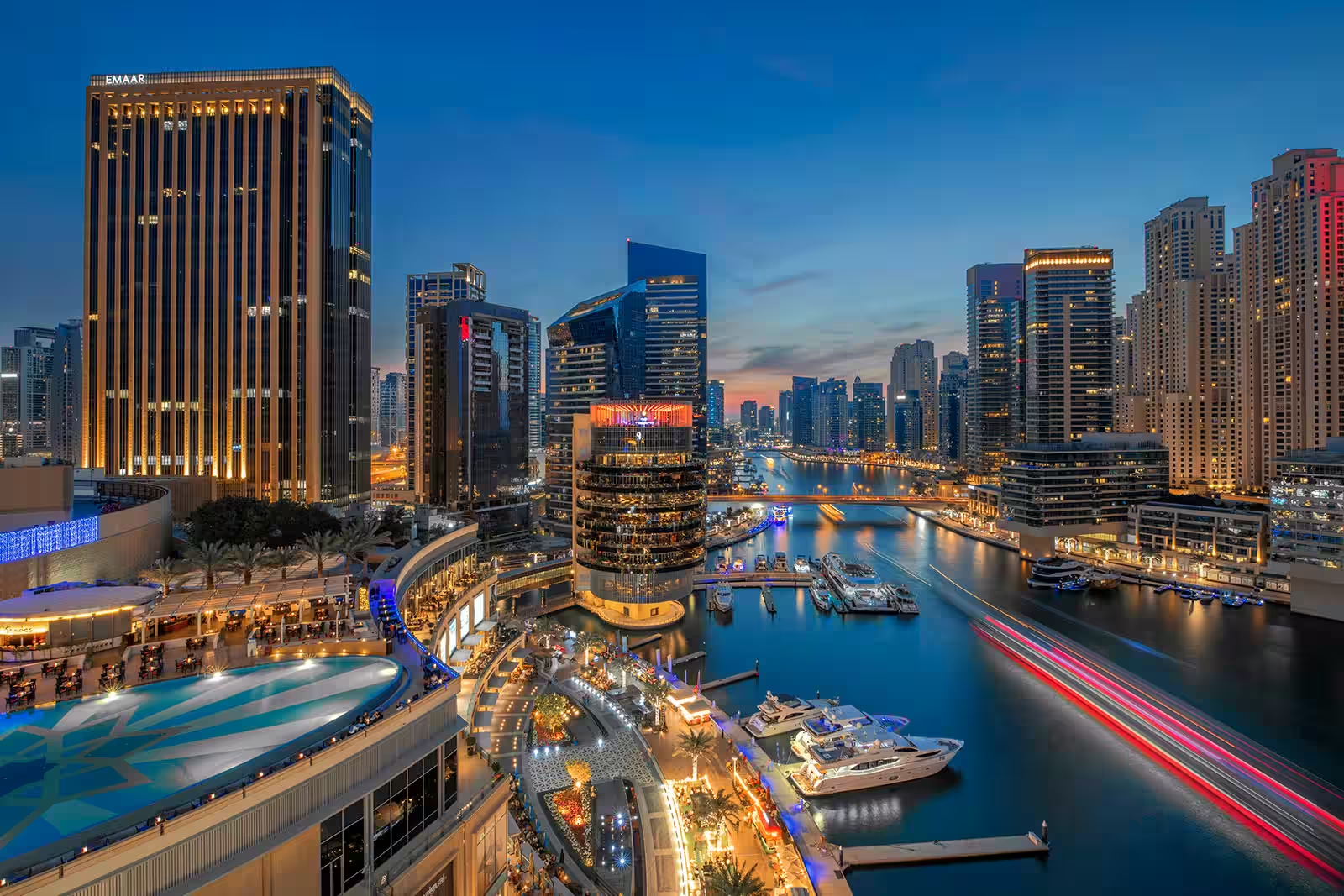
dubai marina night
Risk & Protection · Owner Guide · Updated August 2026

Home Insurance in Dubai
What Your Building Already Covers, and What It Does Not

Most Dubai apartment owners are already paying for building insurance and do not know it — Dubai law obliges the management entity to insure the structure, and the premium comes out of your service charge. The expensive mistake is assuming that cover reaches inside your front door. Here is exactly where it stops, and what each type of owner, landlord and tenant needs to hold themselves.

⚖️ Law No. (6) of 2019
🏛️ CBUAE Regulated
🔑 Owner · Landlord · Tenant
Article 41Law 6/2019 Building Insurance Duty
Service ChargesHow the Master Policy Is Funded
MortgageWhen Cover Becomes Mandatory
CBUAERegulator of UAE Insurers
The Basics

What “Home Insurance” Actually Means in Dubai

In most property markets, home insurance is a single decision: you buy a policy, or you do not. In Dubai it is two decisions, because a large part of the risk on an apartment is already insured before you make any choice at all — and you are already paying for it.

The reason is statutory. Under Article 41 of Law No. (6) of 2019 Concerning Ownership of Jointly Owned Real Property in the Emirate of Dubai, the management entity must insure the jointly owned real property. The law calls for cover that answers for the maintenance and reconstruction of the jointly owned real property, and separately for cover against liability for damage and for bodily injury. That is the master policy, and it is arranged for the building as a whole rather than unit by unit.

It is not free. The same article provides that insurance premiums payable by owners will be included in the service charges, and Article 30 expressly lists paying the jointly owned real property insurance premiums among the permitted uses of the service charge account. That is why building insurance shows up as a line on an association statement — a small share of the budget, but a real one. Our guide to Dubai service charges sets out where it sits among the other components, and our owners’ association and Mollak guide explains who approves the budget it comes out of.

So the useful question is not “should I insure my Dubai apartment?” It is: where does the master policy stop, and what do I hold on the other side of that line? The answer is consistent across almost every jointly owned building in the emirate. The master policy covers the structure and the common parts. Everything from the inside face of your walls inwards — your fit-out, your belongings, and your own liability — is yours.

Two groups need to read this differently. A buyer using a mortgage does not get to treat cover as optional: the lender makes property insurance a condition of the loan. And a villa owner on a standalone freehold plot frequently has no master policy over the structure at all, which turns the largest asset they own into the one thing nobody has insured.

TruHauz perspective: Ask the owners’ association for the master policy summary before you price a single quote. It tells you what you are already buying with your service charge, and it is the only way to size the policy you actually need instead of the one you are sold. Owners in high-amenity towers such as Dubai Marina and Palm Jumeirah are funding a substantial master policy through their charges; owners in Jumeirah Village Circle mid-market stock are funding a smaller one. Neither is insuring your kitchen.

Home Insurance in Dubai at a Glance

Who insures what, and under what authority

Structure & common partsManagement entity
Legal basisLaw No. (6) of 2019
Who funds the master policyOwners, via service charges
Your unit’s interiorOwner
Furniture & belongingsOccupier
Mandatory for cash buyersNo
Mandatory with a mortgageYes — lender requires it
RegulatorCentral Bank of the UAE
The Dividing Line

What the Master Policy Covers — and What It Leaves to You

The single most useful table in this guide. Everything above the line is insured by the building. Everything below it is insured by you, or by nobody.

What Is At Risk Who Insures It Which Policy
Building structure Management entity, under the master policy Master policy
Common areas Management entity — lobbies, corridors, lifts, plant, shared amenities Master policy
Liability in common areas Management entity — liability for damage and for bodily injury Master policy
Your unit’s interior & fit-out The owner, under an individual buildings or interior policy Your policy
Furniture, electronics, valuables Whoever owns them — the resident, under contents cover Your policy
Liability inside your own unit The owner or occupier, under personal / occupier’s liability Your policy
A tenant’s belongings The tenant. Not the landlord, not the master policy Tenant’s policy
Loss of rent after damage The landlord, if the policy is extended to include it Optional add-on
A standalone villa’s structure The owner. There is often no master policy over the building Your policy
The bank’s interest in the asset The owner, on the lender’s terms, as a condition of the mortgage Required by lender

Master-policy obligations are those set out in Articles 41 and 30 of Law No. (6) of 2019 Concerning Ownership of Jointly Owned Real Property in the Emirate of Dubai, published on the Dubai Government Legislation portal. The scope of an individual building’s policy is set by its own schedule — always read the actual master policy for your development rather than relying on a general summary.

By Situation

Six Positions, Six Different Answers

“Do I need home insurance in Dubai?” has no single answer. It depends entirely on which of these six you are.

The Apartment Owner-Occupier
Situation 01 · Jointly Owned
Contents plus interior and liability
StructureMaster policy
You must insureInterior & contents
Often forgottenPersonal liability
First stepRead the master policy
The Apartment Landlord
Situation 02 · Let Unit
Landlord cover, not tenant cover
StructureMaster policy
You must insureInterior & fit-out
ConsiderLoss of rent
Not your jobTenant’s belongings
The Villa Owner
Situation 03 · Biggest Gap
Villa no master policy over the structure
StructureUsually yours to insure
You must insureBuilding & contents
CheckCommunity documents first
Risk if skippedThe whole asset
The Mortgaged Buyer
Situation 04 · Lender Terms
Required as a condition of the loan
Property coverRequired by lender
Life coverCommonly required too
Set up atLoan drawdown
Ask forThe Key Facts Statement
The Tenant
Situation 05 · Contents Only
Optional but the only cover for your things
StructureNot your concern
You may insureContents & liability
Classic claimWater damage below
Read firstYour tenancy contract
The Short-Stay Operator
Situation 06 · Licensed Letting
Declare it commercial use changes the policy
Use typeShort-term letting
RiskStandard policy may exclude
Tell the insurerBefore the first guest
Also neededThe DET licence

Not sure what your building’s master policy actually covers?

Tell us the tower or community and TruHauz will help you obtain and read the master policy summary before you buy cover you may not need.

Ask TruHauz →
The Analysis

The Three Gaps That Catch Dubai Owners Out

Every one of these is created by the same assumption — that because something is insured, everything is insured.

Gap 1

The Interior Nobody Insured

The master policy reinstates the building. It does not reinstate your kitchen. Owners who have spent heavily on fit-out frequently discover that the most expensive part of their unit — the part they chose and paid for — sits in the space between the association’s policy and no policy at all.

Gap 2

The Villa With No Master Policy

Apartment owners are protected by default because Article 41 forces someone to insure the structure. A standalone villa on its own plot often has no equivalent. The community may insure shared landscaping and roads and nothing else. The single largest asset most owners hold can therefore be entirely uninsured without anyone ever mentioning it.

Gap 3

The Liability Everyone Assumes Away

The master policy covers liability for damage and bodily injury arising in the jointly owned property. It is not there to answer for a burst hose in your utility cupboard that soaks three apartments below. That claim lands on the unit owner or occupier, and personal liability cover is the cheapest part of a policy people routinely leave off.

The bottom line: Do not start by asking how much a policy costs. Start by asking what is already insured, and by whom. In a jointly owned Dubai building the answer is written into Law No. (6) of 2019 and paid for out of your service charge, and it stops at your front door. Request the master policy summary from the owners’ association, establish where its cover ends, and buy a policy that begins exactly there. For a villa, assume nothing is insured until the community documents prove otherwise. That is a twenty-minute exercise that decides whether a bad day costs you an excess or costs you the asset.
Please note: This guide explains how Dubai’s jointly owned property framework allocates insurance responsibility. It is general information, not legal advice and not insurance advice, and it is not a recommendation of any policy, insurer or broker. Policy wordings, exclusions and excesses differ between insurers and between buildings. Confirm that any insurer or broker you deal with is licensed by the Central Bank of the UAE, and take professional advice on your own circumstances before relying on any cover.
FAQ

Frequently Asked Questions

The questions Dubai owners, landlords and tenants ask most often about home and property insurance.

Is home insurance mandatory in Dubai?+
It depends on how you bought. If you are buying with a bank mortgage, the lender will require property insurance as a condition of the loan — The National’s property columnist Mario Volpi put it plainly in a 29 July 2021 column: when buying via bank finance, the lender will insist that the loan is protected with property insurance. If you buy with cash there is no such requirement, and cover is advisable rather than compulsory. Contents insurance is separate again and, as that same column notes, remains solely at the occupier’s discretion. Note that this is about your own policy. In a jointly owned building the structure is insured anyway, because Article 41 of Dubai Law No. (6) of 2019 obliges the management entity to insure the jointly owned real property.
What does my building’s master policy already cover?+
In a jointly owned building in Dubai the management entity must insure the jointly owned real property under Article 41 of Law No. (6) of 2019. The law requires cover for the maintenance and reconstruction of the jointly owned real property, and separately cover against liability for damage and for bodily injury. In practice that means the structure and the common parts — the frame, roof, facade, lobbies, corridors, lifts, plant rooms and shared amenities — plus public liability arising in those common areas. It does not extend to what is inside your own front door.
Who pays for the building’s master policy?+
You do, through your service charge. Article 41 of Law No. (6) of 2019 states that insurance premiums payable by owners will be included in the service charges, and Article 30 expressly permits the service charge account to be used for paying the jointly owned real property insurance premiums. This is why building insurance appears as a line item on a Dubai owners’ association service-charge statement. It is usually a small share of the total budget, but it is already being collected from you — which is exactly why you should read the master policy rather than assume nothing is insured.
What is not covered by the master policy, and what should I insure myself?+
Three things sit outside it. First, the interior of your unit — fit-out, flooring, kitchens, wardrobes, bathrooms and any upgrades you installed. Second, your contents: furniture, electronics, clothing, jewellery and personal effects. Third, your own personal and occupier’s liability for something that happens inside your unit rather than in the common areas. A landlord should also consider loss of rent cover, because a unit made uninhabitable still carries its service charge while producing no income. A standalone villa on its own freehold plot is the bigger exposure, because there is often no master policy insuring the structure at all.
Do tenants in Dubai need home insurance?+
A tenant does not own the structure and has no duty to insure it. What a tenant can lose is their own contents and their own liability — a leaking washing machine that damages the apartment below is the classic example. Neither the landlord’s policy nor the building’s master policy exists to replace a tenant’s belongings. Contents cover is optional in Dubai and is at the occupier’s discretion, but it is the only policy that puts a tenant’s own possessions back. Tenants should also read their tenancy contract, since maintenance and repair obligations are set there and determine who bears what.
Who regulates insurance companies in the UAE?+
The Central Bank of the UAE. Until 2020 the UAE insurance market was supervised by a separate Insurance Authority, established under Federal Law No. 6 of 2007. Following Decretal Federal Law No. (25) of 2020 the Insurance Authority was merged into the Central Bank, which took over the regulatory, supervisory, licensing and enforcement functions for the insurance sector. A newer Central Bank law came into force on 16 September 2025 and expressly lists insurance, reinsurance, takaful and re-takaful among licensed financial activities, with entities newly in scope given until 16 September 2026 to regularise their licensing. Before buying any policy, check the insurer or broker is licensed by the Central Bank.
Related reading: The master policy premium reaches you through the service charge — see what a Dubai service charge covers and how it hits net yield, and who approves that budget under Law No. (6) of 2019. If you are letting the unit, the repair and maintenance obligations that sit alongside insurance are set in the lease — our Dubai tenancy contract guide covers what the law requires. Running the property as a short-stay let changes the risk profile and the licensing position — see the Dubai holiday home licence guide. Buying with finance? The TruHauz mortgage guide sets out the lender process, and defects found at handover are a separate question again — see your snagging and handover rights.
Talk to TruHauz

Know What You Already Own Before You Insure It

TruHauz reviews the association documents on every property we advise on — including what the master policy insures and where it stops. Tell us what you are buying or letting.


📞Phone / WhatsApp+971 52 971 5488
🏢RERA Licensed60838 — Dubai, UAE

Join The Discussion